Seasonal Appliance Maintenance in Palm Springs: Prepping Your Home for Winter

Why Do Appliances Fail After Summer Dormancy in the Coachella Valley?
Returning to your desert home in Palm Springs or Rancho Mirage for the winter should mean seamless relaxation, but months of idle summer dormancy often trigger unexpected breakdowns the moment you unpack. Before loading groceries or hosting seasonal dinner parties, ensuring proper seasonal appliance maintenance and refrigerator repair in Palm Springs across your kitchen protects custom built-ins from dried door seals, seized valves, and costly holiday failures.
Returning to a seasonal residence in Palm Springs, Rancho Mirage, Indian Wells, or Palm Desert is meant to mark a seamless transition to desert leisure, outdoor living, and holiday entertaining. However, turning major appliances back on after months of off-season vacancy regularly exposes silent mechanical degradation.
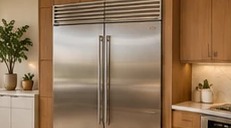
Luxury built-in refrigeration suites, precision undercounter wine storage, and high-performance dishwashers do not tolerate prolonged summer dormancy well. The Coachella Valley microclimate presents environmental stressors distinct from coastal or temperate regions. Understanding the exact mechanical breakdown pathways caused by desert heat, airborne mineral dust, and regional water profiles allows you to systematically inspect, restore, and commission your appliances before holiday guests arrive.
The Mechanical Physics of “Desert Dormancy”
Leaving an unoccupied desert home with thermostats maintained between 80°F and 88°F prevents drywall cracking and furniture warping, but it does not protect delicate appliance sub-assemblies from steady thermal and mineral stress. Over a typical May-to-November absence, appliances suffer from three primary physical breakdown cycles.
1. Elastomer Desiccation and Magnetic Gasket Separation
Sub-Zero, Thermador, Monogram, and Viking refrigeration units utilize vinyl and synthetic rubber perimeter door gaskets embedded with flexible magnetic strips. These components rely on two operational factors to preserve their physical properties: moderate ambient relative humidity and continuous mechanical compression cycles.
During the low-humidity desert summer—where relative humidity routinely plummets below 10%—the plasticizers within synthetic gaskets leach out. The material shrinks, becomes brittle, and pulls away from the cabinet perimeter. Once the airtight seal fails, warm, buoyant desert air continuously infiltrates the cooling compartment. This forces the evaporator system into continuous defrost recovery, creating heavy frost accumulation along the back panels, causing drain pans to overflow, and pushing dual compressors into chronic high-head-pressure operation that trips internal thermal overload protectors.
2. Evaporative Mineral Calcification in Fluid Controls
The Coachella Valley Water District (CVWD) and Desert Water Agency (DWA) draw groundwater from deep regional aquifers alongside surface allocations from the Colorado River Aqueduct. This regional supply exhibits elevated hardness levels, often exceeding 15 to 22 grains per gallon (GPG), alongside high total dissolved solids.
When an automatic ice maker, steam oven, or dishwasher sits untouched for half a year, the static water trapped between the brass isolation shut-off and internal electromagnetic intake solenoids gradually evaporates through ambient thermal venting. This leaves concentrated calcium carbonate (CaCO3) and magnesium deposits behind. The mineral crust fuses mechanical plungers, binds rubber diaphragm seats, and clogs micro-screen inlet filters. When power and water pressure are restored in the autumn, these calcified valves either refuse to open (starving the system) or fail to seal completely, creating catastrophic slow leaks inside custom cabinetry.
3. Particulate Silt Congestion in High-Static Heat Exchangers
The northern Coachella Valley, especially along the base of the San Jacinto and Santa Rosa ranges and throughout wind-prone zones in North Palm Springs and Cathedral City, regularly experiences severe blowing dust events. Super-fine blowsand and mineral particulate enter mechanical chases, toe-kicks, and architectural soffits.
Over a half-year vacancy, this particulate blankets the wire-and-tube or finned-pack condenser coils located at the crowns of luxury refrigerators. The resulting particulate felt acts as an insulative blanket, cutting static heat rejection by more than 40%. When the system attempts its initial seasonal pulldown, condenser temperatures spike drastically, turning the synthetic POE (polyolester) compressor oil acidic and accelerating bearing wear.
4 Critical Startup Inspections Within Your First 48 Hours
Do not load perishable gourmet groceries or vintage wine collections into your appliances immediately upon arrival. Run this targeted 4-point verification protocol over your first two days back.
1. Built-In Refrigerator and Dual-Compressor Pulldown
High-end preservation suites feature dedicated cooling circuits for fresh food and frozen compartments. Restarting these machines requires gradual stabilization rather than immediate maximum cooling demand.
- Condenser Coil Decontamination: Remove the decorative louvered overhead grille. Using a soft-bristle brush attachment paired with a high-efficiency vacuum, clear the face of the aluminum fins. Brush strictly in the direction of the fins to prevent bending the thin aluminum channels.
- Ice Line Purge and Valve Audit: Discard the first four complete harvests of ice. Stagnant water resting inside cross-linked polyethylene (PEX) or braided stainless feed lines absorbs plasticizers and mineral concentrations over months of summer heat. Inspect the brass compression fittings behind the bottom kickplate for signs of blue-green oxidation, which indicates a weeping valve seal.
- Compressor Cycle Monitoring: Allow the system 24 undisturbed hours to achieve factory targets (37°F fresh food, 0°F freezer). If the top mechanical compartment emits continuous rhythmic clicking at 45-to-90-second intervals without the compressor starting, the start capacitor or solid-state potential relay has failed from heat fatigue and must be replaced before the motor windings overheat.
For complex diagnostic faults, electronic control board errors, or compressor relay failures on luxury architecture in custom desert homes, rely on dedicated refrigerator and ice maker repair across Palm Springs to restore factory-spec cooling tolerances before your seasonal entertaining begins.
2. Wine Cellar and Undercounter Beverage Column Calibration
Undercounter wine preservation columns (including units by EuroCave, Marvel, Sub-Zero, and True) feature tight temperature deadbands designed to protect aging collections.
- Condensate Drain Evacuation: Dust infiltration routinely mixes with interior condensation, forming an algorithmic sludge that seals the internal V-shaped collection trough along the rear interior wall. Locate the drain exit hole, flush it with a warm 50/50 mix of distilled water and white vinegar via a syringe or squeeze bottle, and verify unrestricted gravity flow into the lower condensate pan.
- Evaporator Fan Integrity: Listen intently as the internal circulation fans engage. A high-pitched warble or mechanical chirp confirms that the motor sleeve bearings have dried out during summer heat. These fans maintain stable humidity and prevent thermal stratification across bottle tiers; a failing motor will lock up under the sustained duty cycles of early winter entertaining.
| Appliance System | Primary Desert Failure Point | Mechanical Diagnostic Indicator | Required Corrective Action |
| Built-In Refrigerator | Thermal-induced coil clogging & relay dry-rot | Clicking start capacitor; upper cabinet warmth | Vacuum fins vertically; verify steady amperage draw on compressors |
| Undercounter Wine Unit | Blocked condensate trough; dried fan bearings | Pooling water beneath bottom wooden racks; bearing screech | Clear rear weep hole with warm dilute acid; lubricate or swap axial fan |
| Luxury Dishwasher | Calcified intake solenoid; seized drain impeller | Loud electrical buzz at cycle start; error codes indicating water fill timeout | Clean water inlet mesh screen; manually spin pump impeller to clear mineral scale |
| Professional Gas Range | Spider/dust blockages in venturi tubes; corroded spark igniters | Rapid continuous spark clicking with yellow, uneven flame lifting | Clean burner ports with a 0.020″ wooden pin; wire-brush micro-corrosion off electrodes |
| Under-Counter Ice Machine | Scaled grid cutter wires; failing circulation pump | Thin, hollow cubes; machine cycling into harvest prematurely | Execute a complete chemical descaling flush; swap inline scale-inhibiting cartridges |
3. Dishwasher Hydraulic System and Sump Restoration
Modern luxury dishwashers (such as Miele, Bosch Benchmark, and Cove) operate with variable-speed, brushless circulation pumps and extremely tight water tolerances. Dishwasher repair should take these factors into account.
- The Impeller Free-Spin Test: When wash water sits stagnant in the bottom sump, dissolved solids precipitate out around the main wash pump shaft seal. Before running your first load, remove the triple-stage filter cylinder, peer into the sump recess, and use a clean, gloved finger or wooden dowel to verify that the drain impeller spins freely. If it feels locked, forcing a cycle will blow the control board’s triac output or burn the motor winding.
- Scale Evacuation Wash: Once free movement is confirmed, pour 16 ounces of food-grade citric acid solution or distilled white vinegar directly into the basin. Run the most intensive sanitation cycle available at maximum water temperature. This dissolves mineral films across heating elements, clears optical turbidity sensors, and restores the flexibility of internal check valves.
4. Professional Gas Ranges and Sealed Burner Igniter Assemblies
Desert dust storms blow fine particulates past the control knobs and manifold covers of commercial-style gas cooktops (such as Wolf, BlueStar, and Dacor).
- Electrode and Flame Rectification Cleaning: Desert humidity shifts cause fine surface oxidation on ceramic spark electrodes. Scour the metal electrode pin gently with fine steel wool or an emery board. Clean burners rely on flame rectification (passing a microscopic micro-amp current through the flame itself to ground) to confirm ignition. If the pin is dirty, the spark module will continue clicking incessantly even after the burner is fully lit.
- Port Orifice Clearance: Never use metal wire hangers, drills, or sewing needles to clean gas outlet ports; doing so bores out the precision-machined brass openings, altering the fuel-to-air stoichiometric ratio. Use a round wooden toothpick to dislodge lint and spider webbing from each individual gas port. Ensure the brass burner ring sits completely flat on the base plate to avoid gas escape and flash-back combustion.
Technical Comparison: DIY Startup vs. Professional Diagnostic Service
Understanding what tasks you can manage safely—and when a certified technician is required—protects your investment and avoids warranty issues on complex built-in appliances.
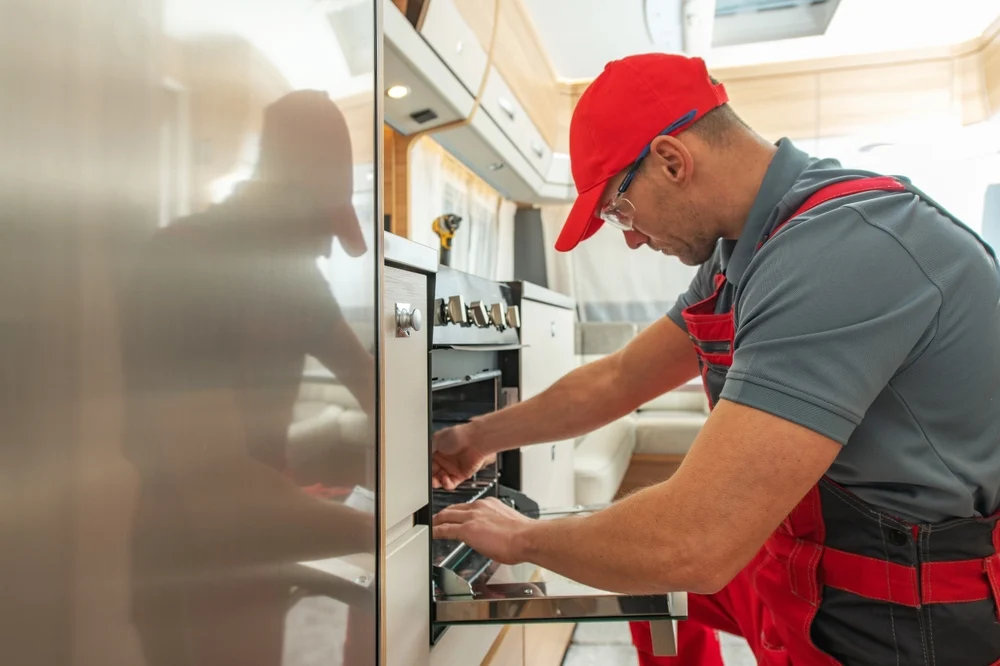
If diagnostic checks reveal recurring error codes, grinding internal drive motors, or persistent moisture beneath custom cabinetry, continuing to run the system risks permanent mechanical failure. In these situations, scheduling dependable appliance repair throughout the Coachella Valley provides the factory-grade diagnostic scanners, genuine OEM solenoids, and factory-trained technicians required to protect your home.
Environmental Safeguards for Future Desert Vacancies
Preventing appliance failure starts long before you return for the winter season. When closing down your desert home in the spring, take proactive measures to mitigate the effects of desert heat:
Applying a specialized food-grade silicone lubricant to perimeter door gaskets before leaving minimizes elastomer drying. Additionally, installing a whole-home water conditioning or scale-reduction system helps protect internal solenoids and valve seats from the high-mineral water common throughout the valley’s desert communities.
Frequently Asked Questions About Seasonal Appliance Maintenance in Palm Springs
What Causes a Luxury Built-in Refrigerator to Stop Cooling Over the Summer in Palm Springs?
The primary culprit is restricted airflow across the top-mounted condenser coils caused by desert dust, combined with failed magnetic door gaskets that have dried out in low humidity. If the compressor continuously clicks or hums loudly without dropping interior temperatures below 40°F, the system has likely tripped its thermal overload relay, blown a start capacitor, or developed an electronic control board fault that requires professional service.
How Hard Is the Water in Rancho Mirage, Indian Wells, and Palm Desert, and How Does It Damage Idle Appliances?
Coachella Valley municipal water drawn from local aquifers and the Colorado River typically registers between 15 and 22 grains per gallon (GPG) of hardness, with high Total Dissolved Solids (TDS). When appliances sit idle through hot summer months, water inside intake solenoids, internal meters, and pump reservoirs evaporates. This leaves heavy calcium carbonate scale behind, which seizes mechanical valves and prevents dishwashers, steam ovens, and ice makers from filling properly when restarted.
Can I Use Normal Descaling Solutions on My Built-in Ice Machine?
No. High-end undercounter clear ice machines (such as those by Scotsman, Sub-Zero, and True) feature nickel-plated or tin-plated evaporator freezing plates. Standard commercial descalers contain aggressive muriatic or phosphoric acids that strip these protective metal platings, ruining the evaporator grid and leaching toxic compounds into future ice batches. Use only factory-approved, nickel-safe ice machine cleaner, mixed precisely with distilled water.
Why Does My Gas Range Keep Clicking After Turning It on for the First Time This Winter?
Continuous igniter clicking usually indicates that the flame rectification circuit cannot sense the burner flame. In the desert, this is commonly caused by fine dust, spider webs, or cleaning moisture shorting the ceramic spark electrode, or by micro-corrosion across the ground plate. If cleaning the burner assembly with a dry toothbrush and realigning the brass cap does not resolve the sparking within 30 seconds of ignition, the spark module or wire harness requires professional diagnostic testing.
How Long Should I Wait for My Refrigerator to Cool Down Before Stocking It With Food?
Allow luxury dual-compressor refrigeration units a minimum of 18 to 24 hours to stabilize completely before filling them with groceries. Built-in units must cool not just the air inside the cabinet, but also the surrounding interior walls, metal shelving, and heavy glass compartments. Introducing a full load of warm groceries before the evaporator reaches 37°F and the freezer reaches 0°F overworks the compressors, leading to extended runtimes and temperature management issues.